
Multi-sport training with certified coaches and structured physical sessions.
At Shanti Niketan Public School, we believe that education extends far beyond the classroom. Physical activity is not just about fitness but also about character, resilience, discipline, and teamwork. Our sprawling multi-sport complex offers world-class facilities and coaching across a wide range of disciplines to ensure the holistic development of every child.
From structured morning drills to inter-house tournaments, students at SNPS are encouraged to “Learn, Develop, Innovate” through physical activity. Each sport we offer is supported by trained coaches, dedicated playing arenas, and an emphasis on technique, sportsmanship, and healthy competition.
Athletics
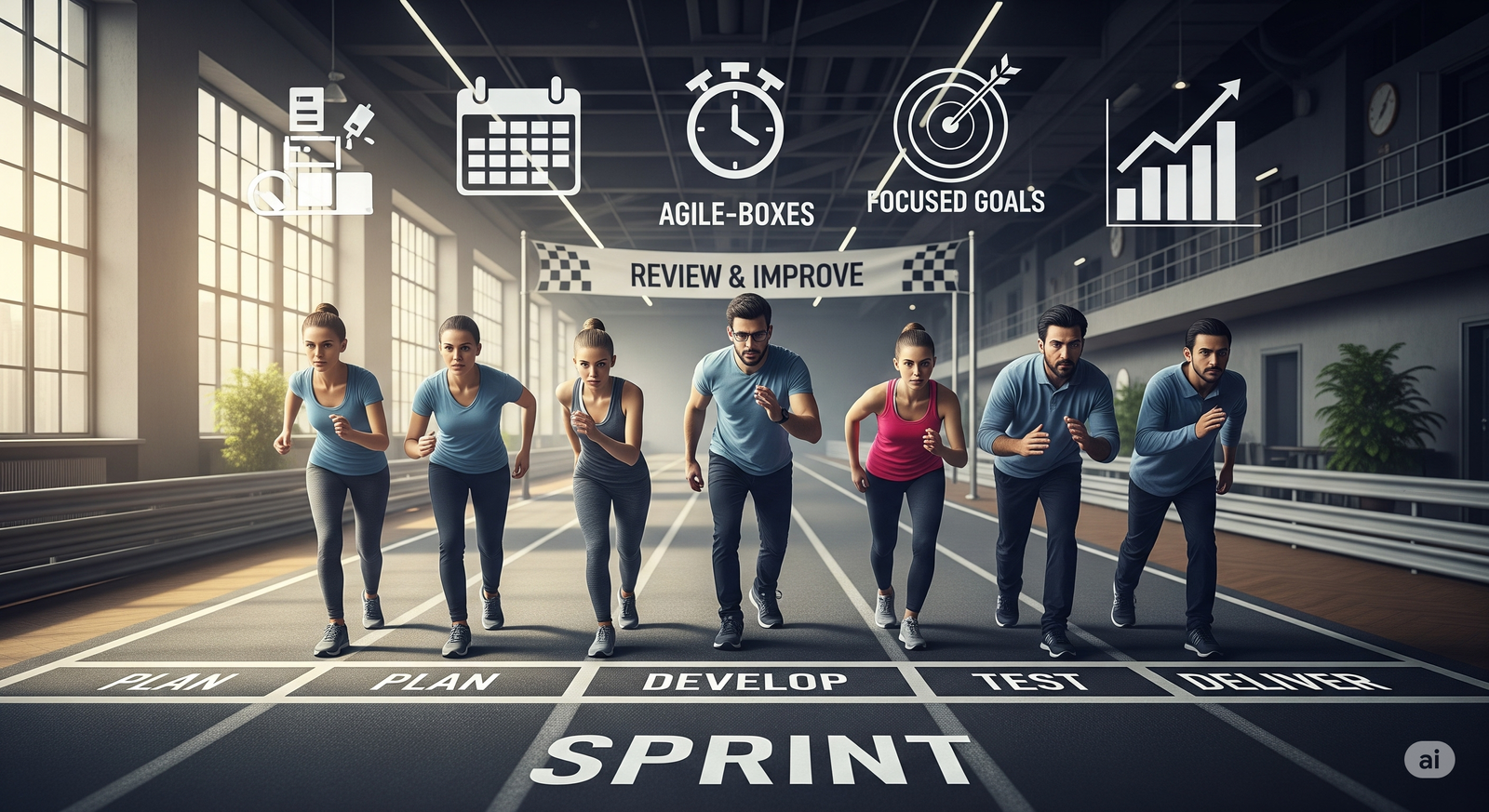
Sprints
Time-boxed: Fixed duration (usually 1–4 weeks) to deliver usable product increments.
Focused Goals: Team commits to a specific set of tasks or features.
Review & Improve: Ends with review and retrospective to refine the next Sprint.

Middle Distance Races
Race Length: Typically 800m to 1500m events.
Balance: Requires both speed and endurance.
Tactics: Pacing and positioning are crucial for success.
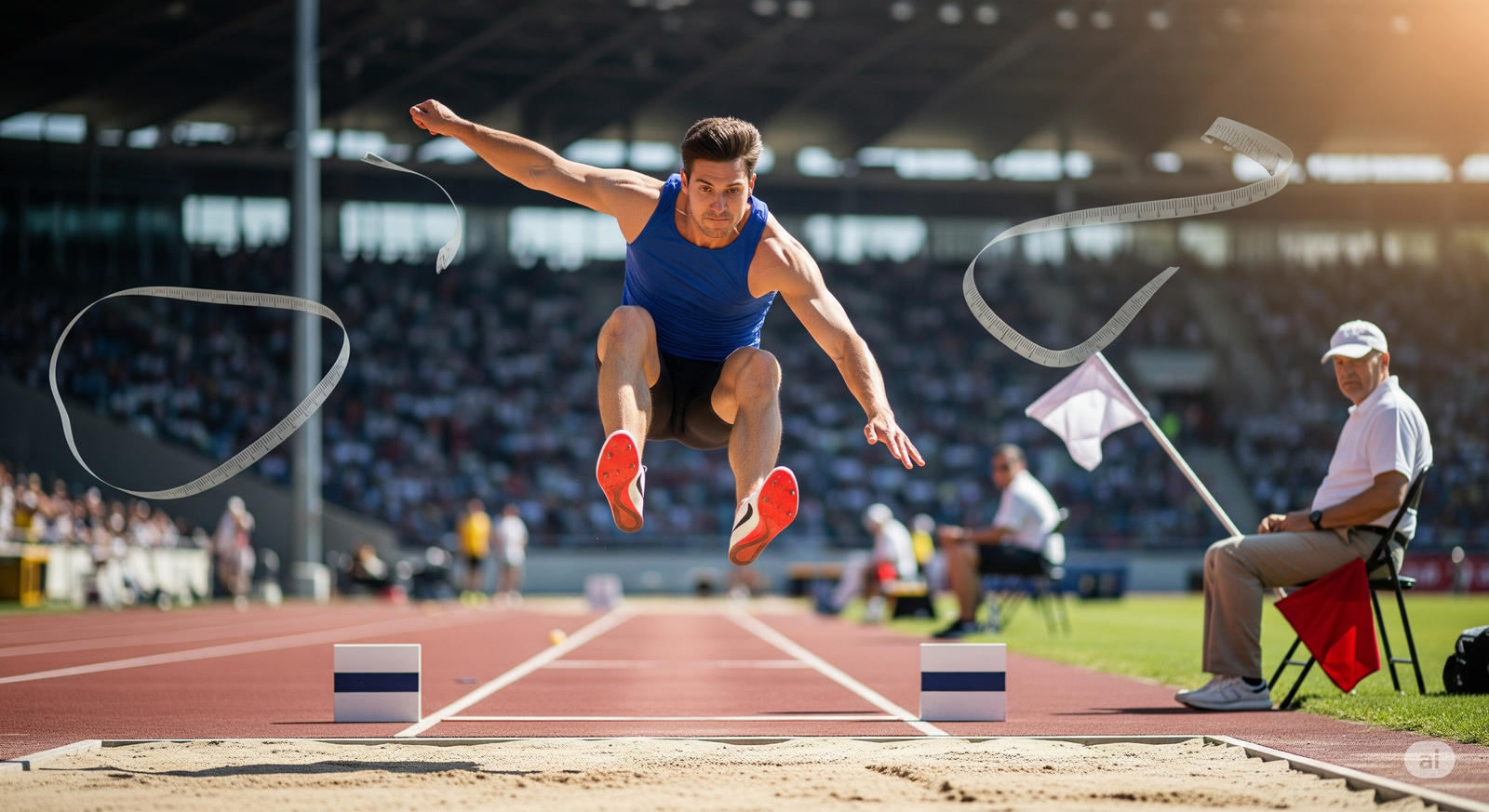
Long Jump
Run-Up: Fast sprint to build momentum.
Take-Off: Jump from a marked board.
Landing: Aim for maximum distance in the sandpit.
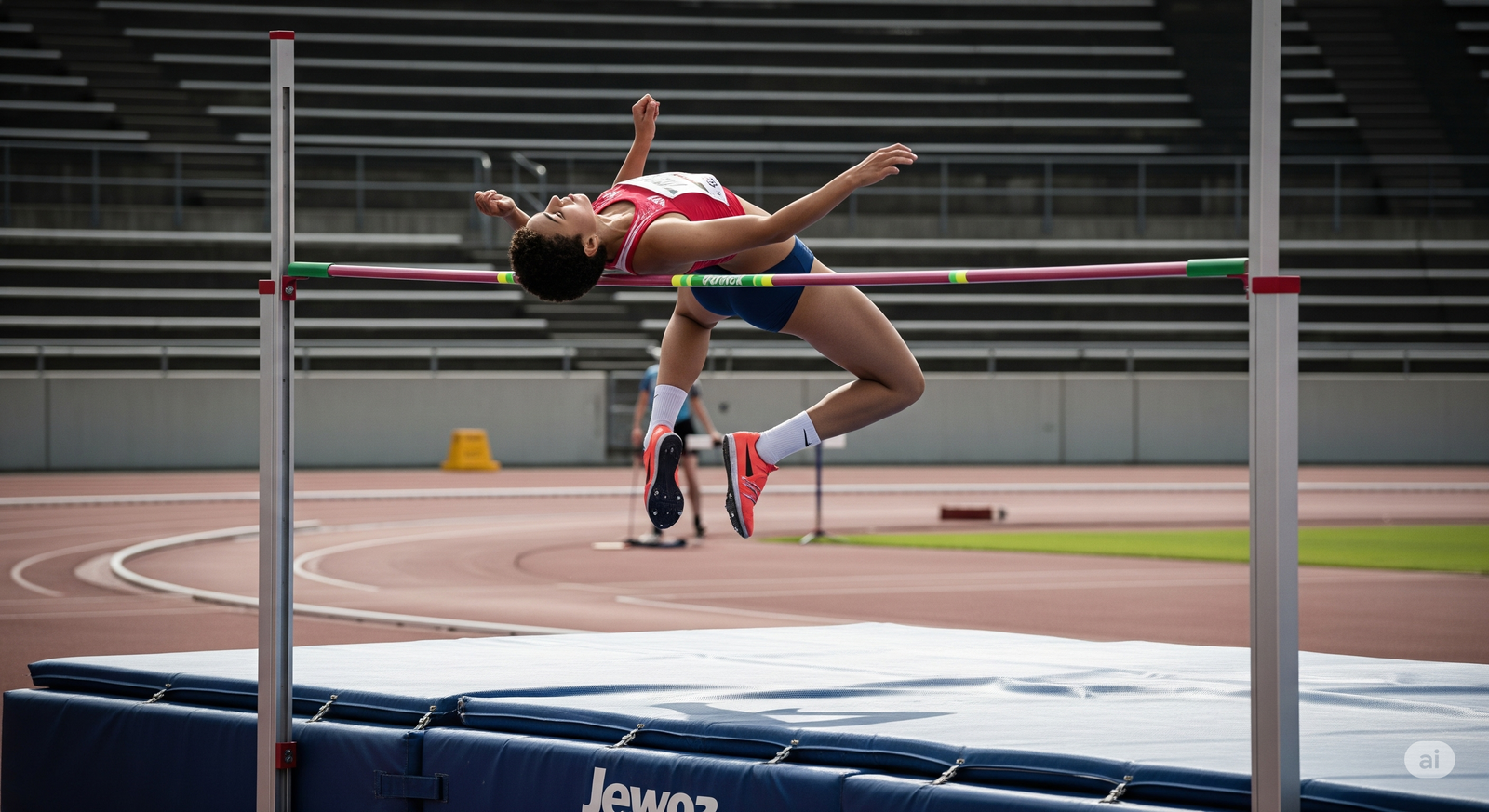
High Jump
Approach: Curved run to gain speed and angle.
Take-Off: Jump off one foot for maximum height.
Fosbury Flop: Common technique to clear the bar backward.
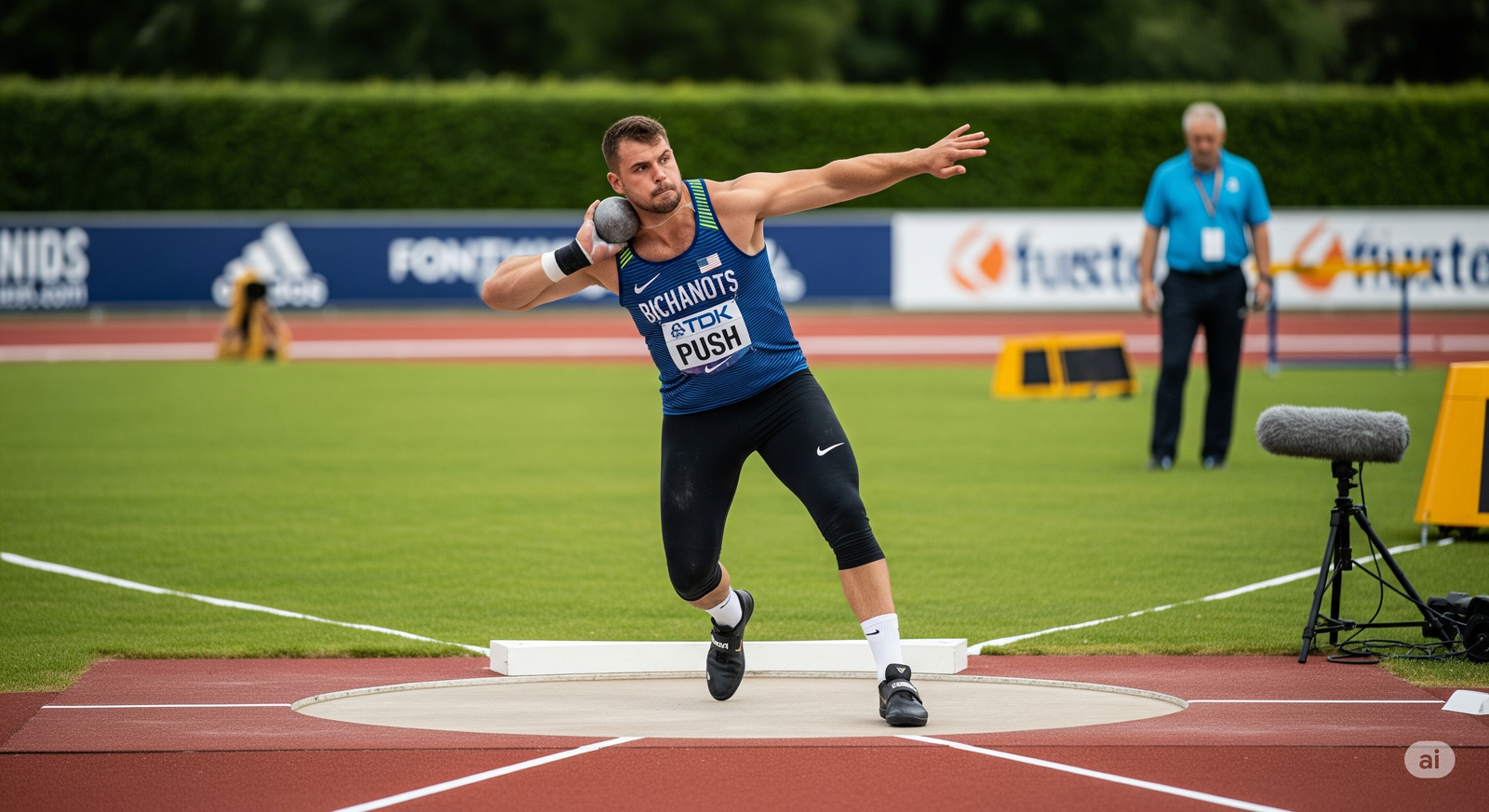
Shot Put
Grip & Hold: Rest the shot near the neck.
Glide or Spin: Technique to build power.
Push, Not Throw: Launch with arm and body strength.
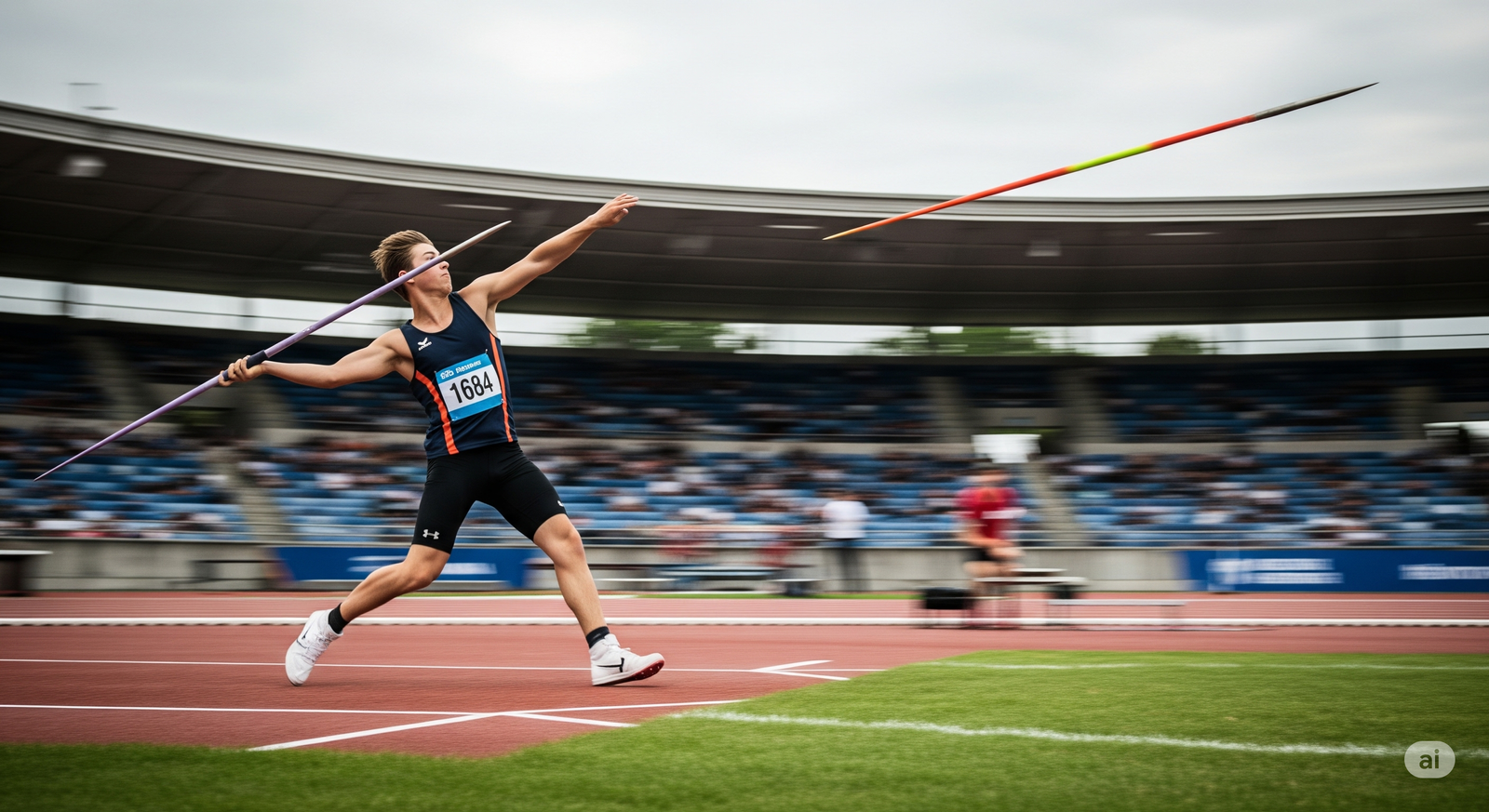
Javelin Throw
Run-Up: Accelerate with controlled steps.
Release: Throw at the right angle with full arm extension.
Follow-Through: Maintain balance after the throw.
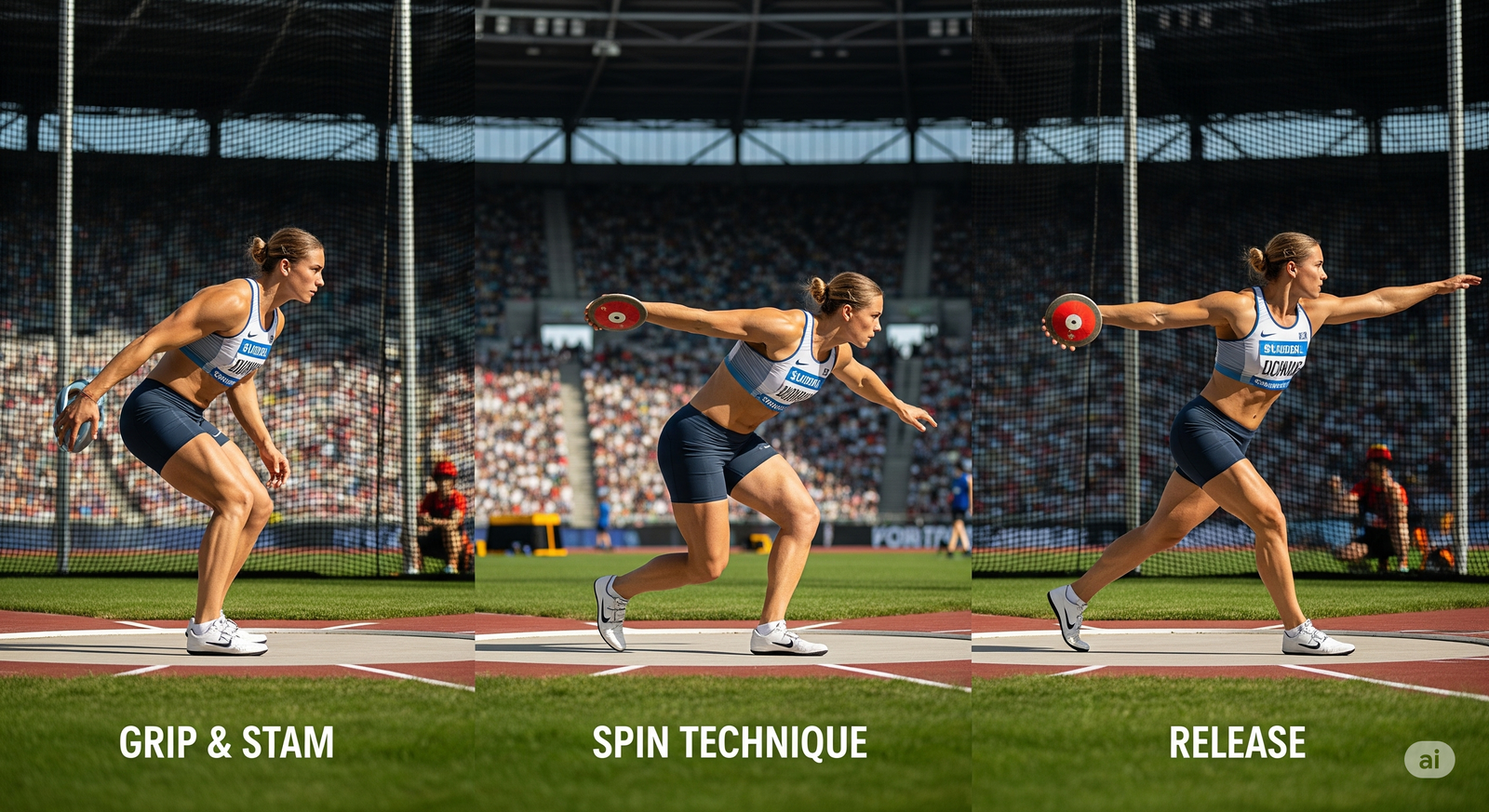
Discus Throw
Grip & Stance: Hold discus flat with fingers, stand sideways.
Spin Technique: Rotate to build momentum.
Release: Throw with a flick of the wrist and body power.
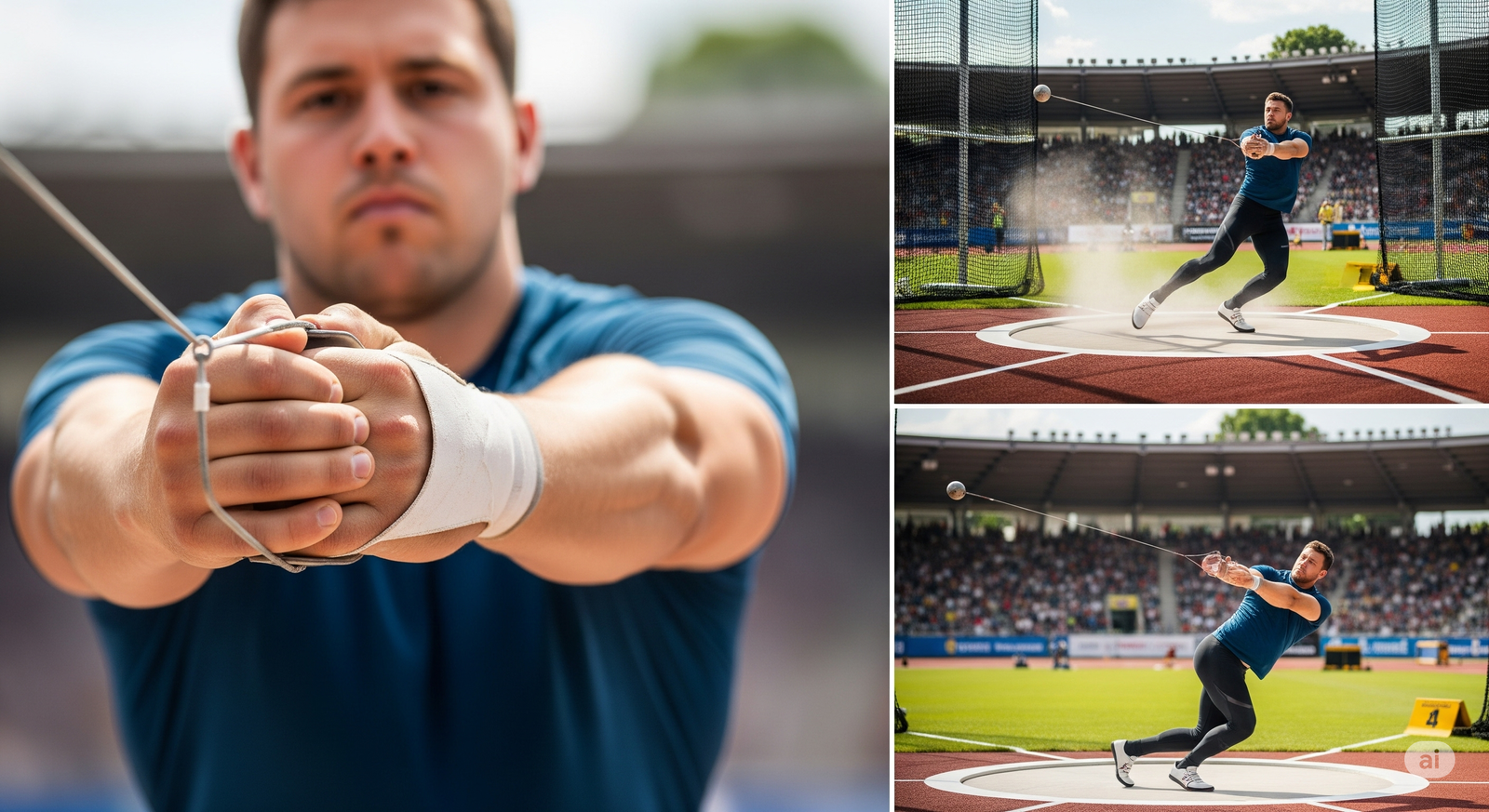
Hammer Throw
Grip & Swing: Hold the handle and start with controlled swings.
Rotations: Spin in the circle to build speed.
Release: Let go at the right moment for maximum distance.
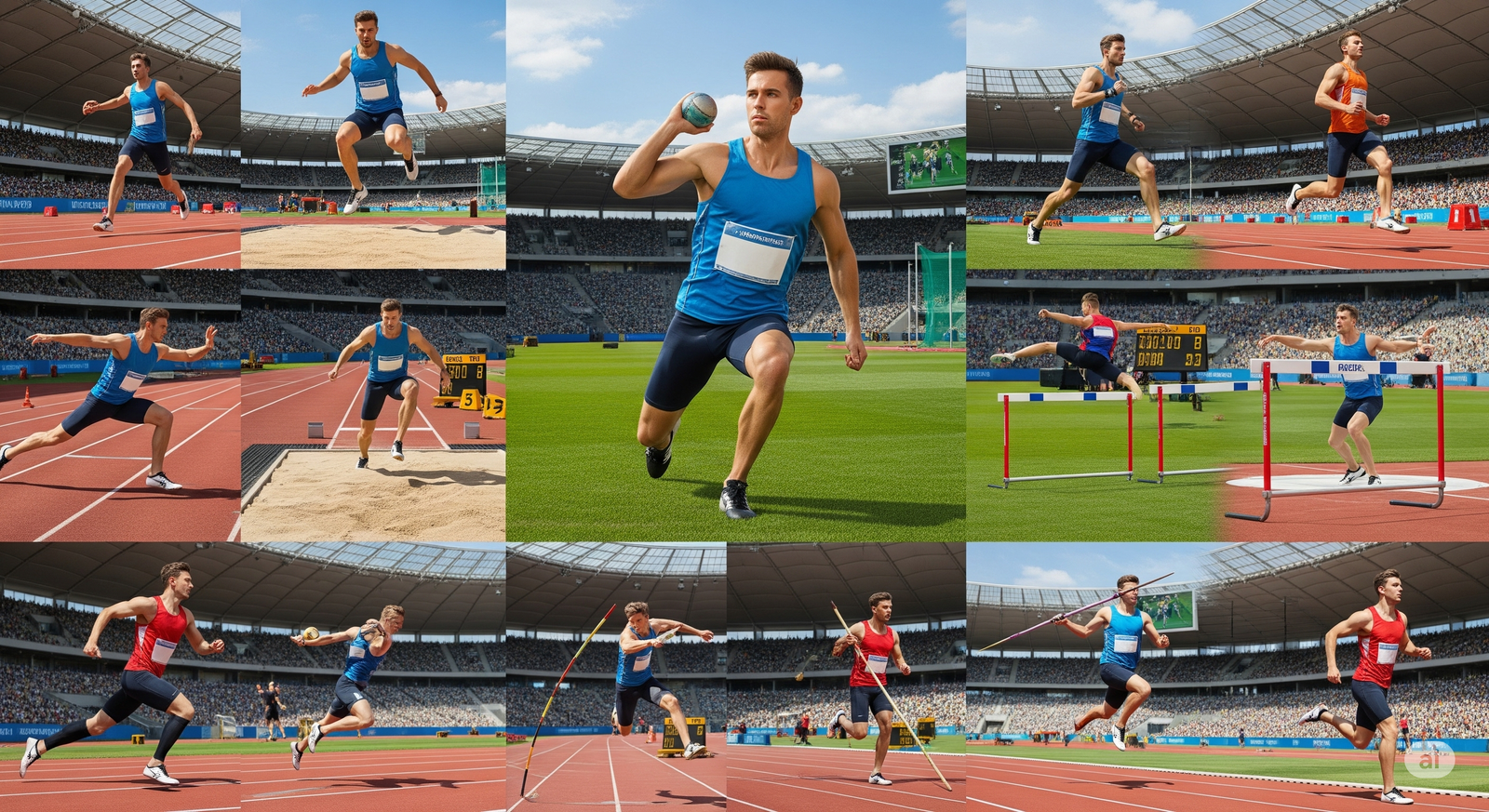
Decathlon
For Men
10 Events: Combines track and field disciplines over two days.
All-Round Skills: Tests speed, strength, endurance, and technique.
Points System: Performance in each event adds to total score.
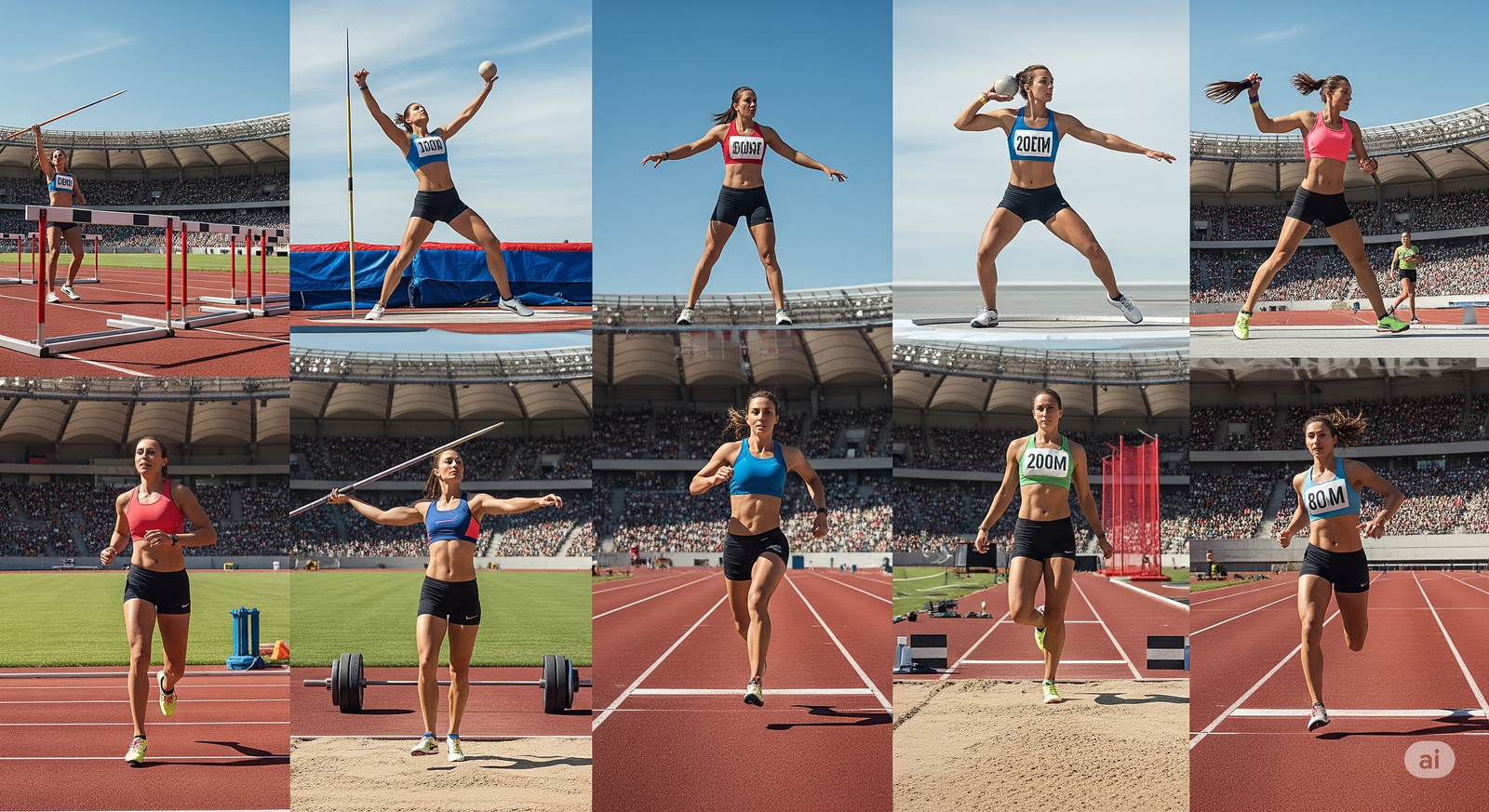
Heptathlon
For Women
7 Events: Held over two days for women athletes.
Multi-Skill Test: Combines sprints, jumps, throws, and middle-distance.
Points-Based: Each event adds to overall score.
Cricket
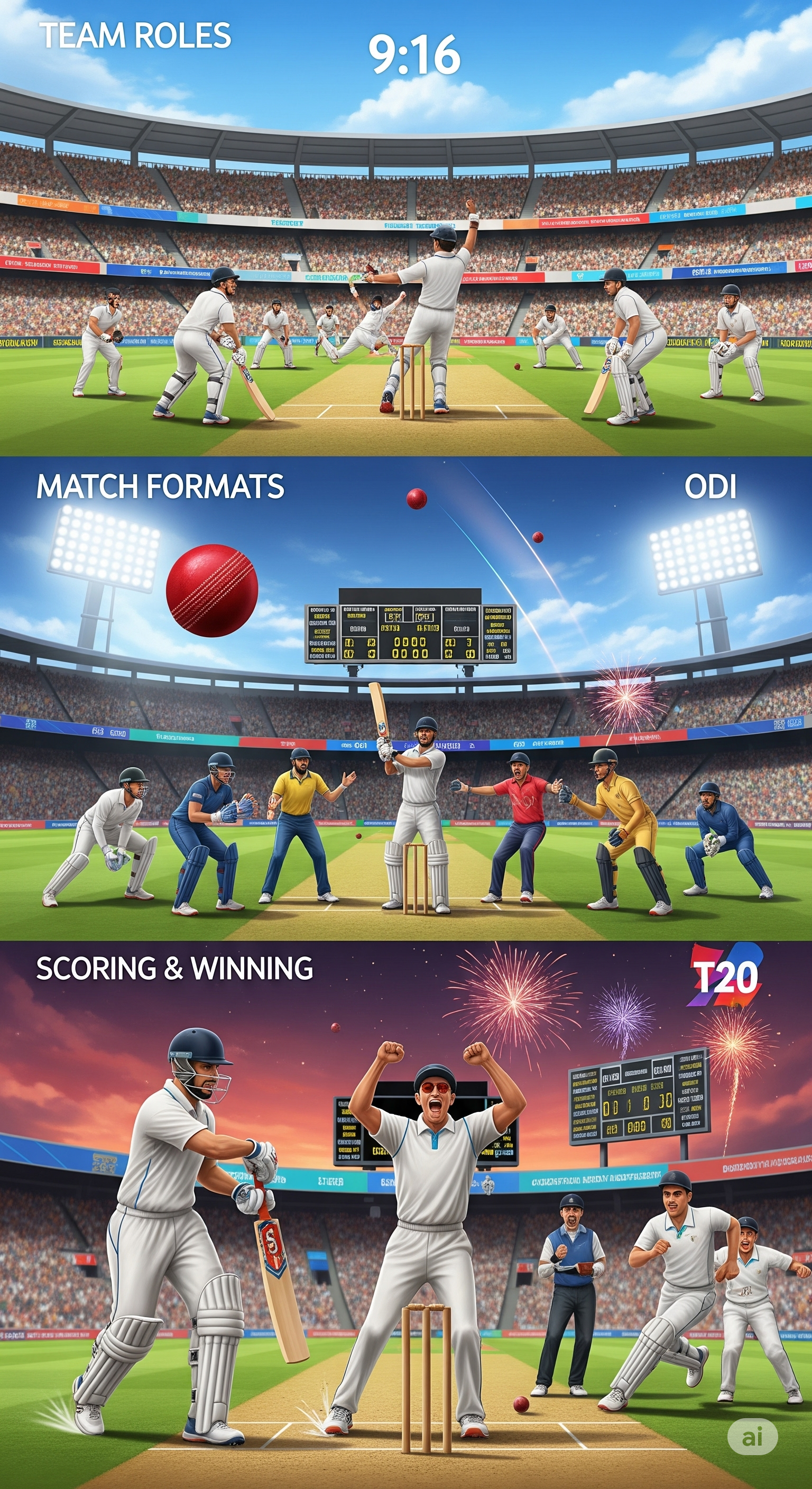
Team Structure and Roles:
Cricket is played between two teams of 11 players each, where team roles are divided among batsmen, bowlers, all-rounders, and a wicketkeeper. Each player contributes uniquely, and team strategy often revolves around balancing batting depth with bowling strength.
Match Formats and Rules:
The game is played in different formats—Test (5 days), One Day Internationals (50 overs), and T20 (20 overs). Each format has distinct rules regarding overs, field restrictions, and game duration, which significantly influence tactics and playing style.
Scoring and Winning Criteria:
The batting team scores runs by hitting the ball and running between the wickets or by hitting boundaries. The bowling team aims to restrict runs and dismiss batters. The team that scores the most runs within the allowed overs or innings wins the match, making strategy, skill, and timing essential for success.
Badminton
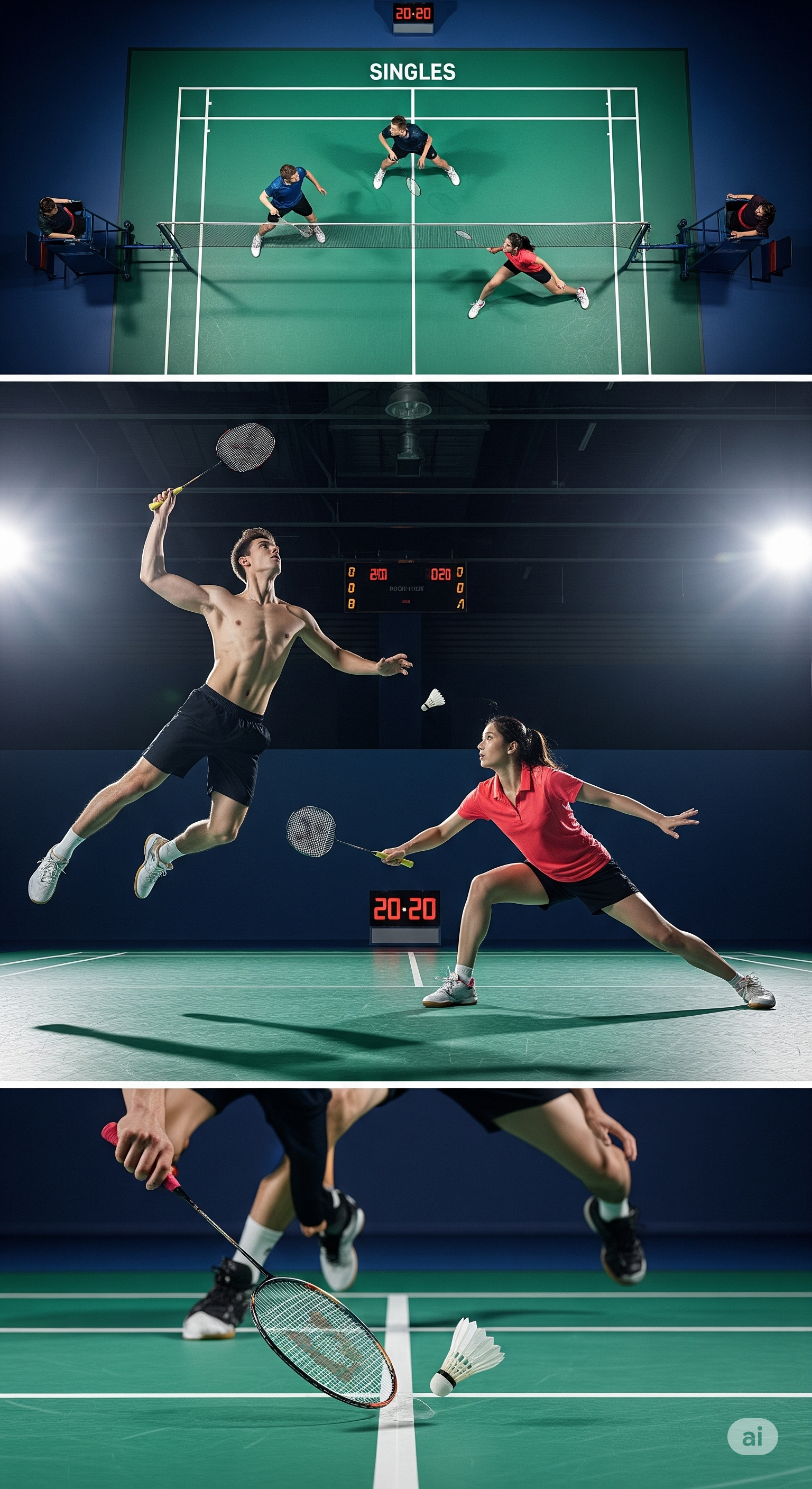
Fast-Paced Racket Sport:
Badminton is a high-speed game played with rackets and a shuttlecock. It requires quick reflexes, agility, and precision. Matches can be singles (1 vs 1) or doubles (2 vs 2), with players aiming to score points by landing the shuttle in the opponent’s court.
Scoring and Gameplay:
Each match is played best of 3 games, with each game going to 21 points. A rally scoring system is used, where a point is awarded on every serve, regardless of who served. Players must win by at least 2 points if the score reaches 20–20, up to a maximum of 30.
Skills and Techniques:
Success in badminton relies on a mix of powerful smashes, deceptive drops, accurate clears, and quick footwork. Strategic placement of shots and anticipation of the opponent’s moves are just as important as physical fitness and speed.
Chess
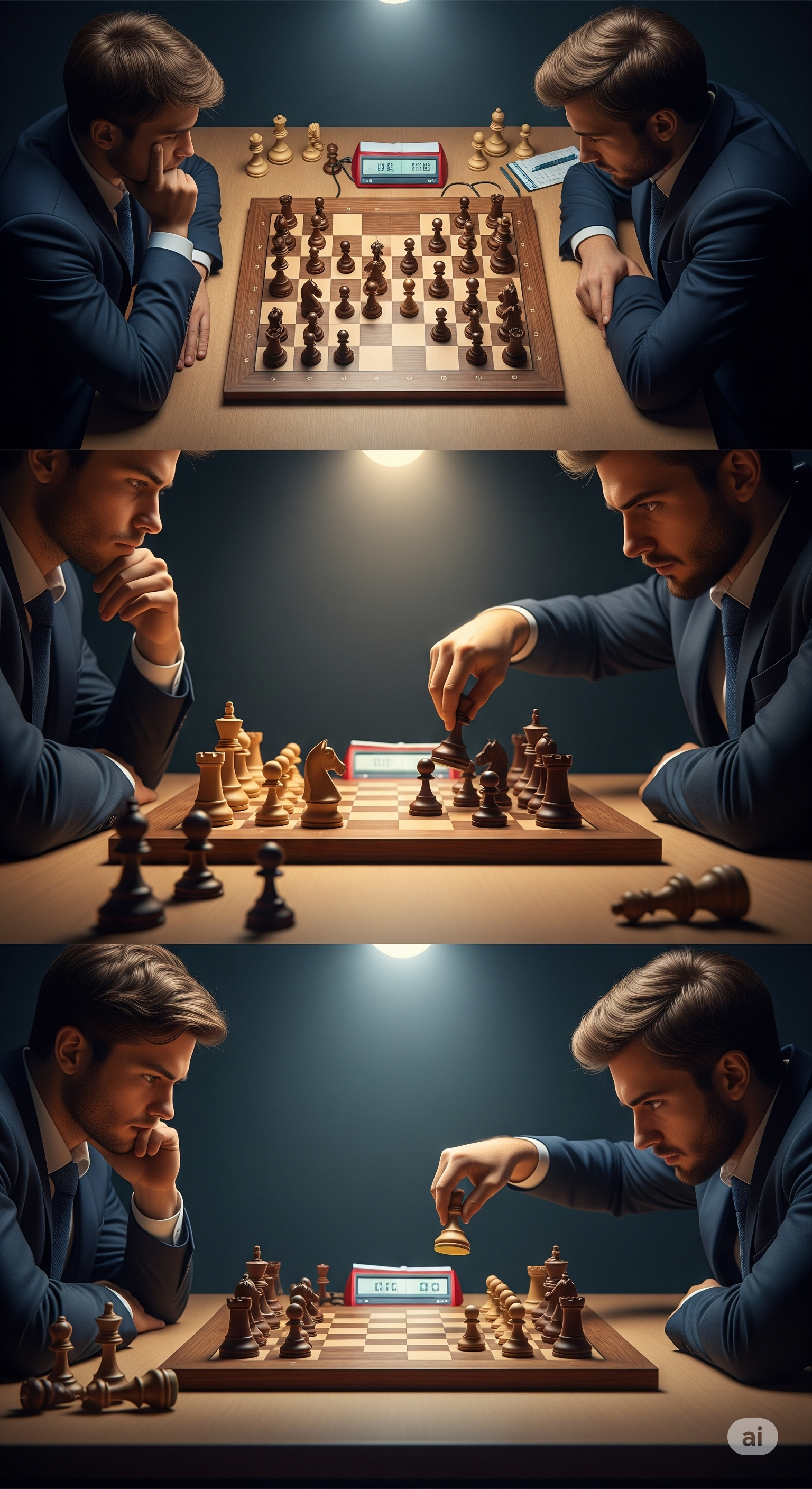
Strategic Board Game:
Chess is a two-player strategy game played on an 8×8 board with 64 squares. Each player starts with 16 pieces, including a king, queen, rooks, bishops, knights, and pawns. The main goal is to checkmate the opponent’s king, placing it under threat with no legal escape.
Phases of the Game:
Chess is divided into three main phases: the opening (developing pieces and controlling the center), the middlegame (tactics, strategy, and attacks), and the endgame (few pieces remain, focus on promoting pawns and delivering checkmate). Mastery of each phase is essential for competitive play.
Mental Skills and Tactics:
The game sharpens memory, concentration, and decision-making. Players use tactics like pins, forks, and skewers to gain an advantage. Deep planning, anticipating opponents’ moves, and adapting strategies are key elements that make chess a mentally demanding and rewarding game.
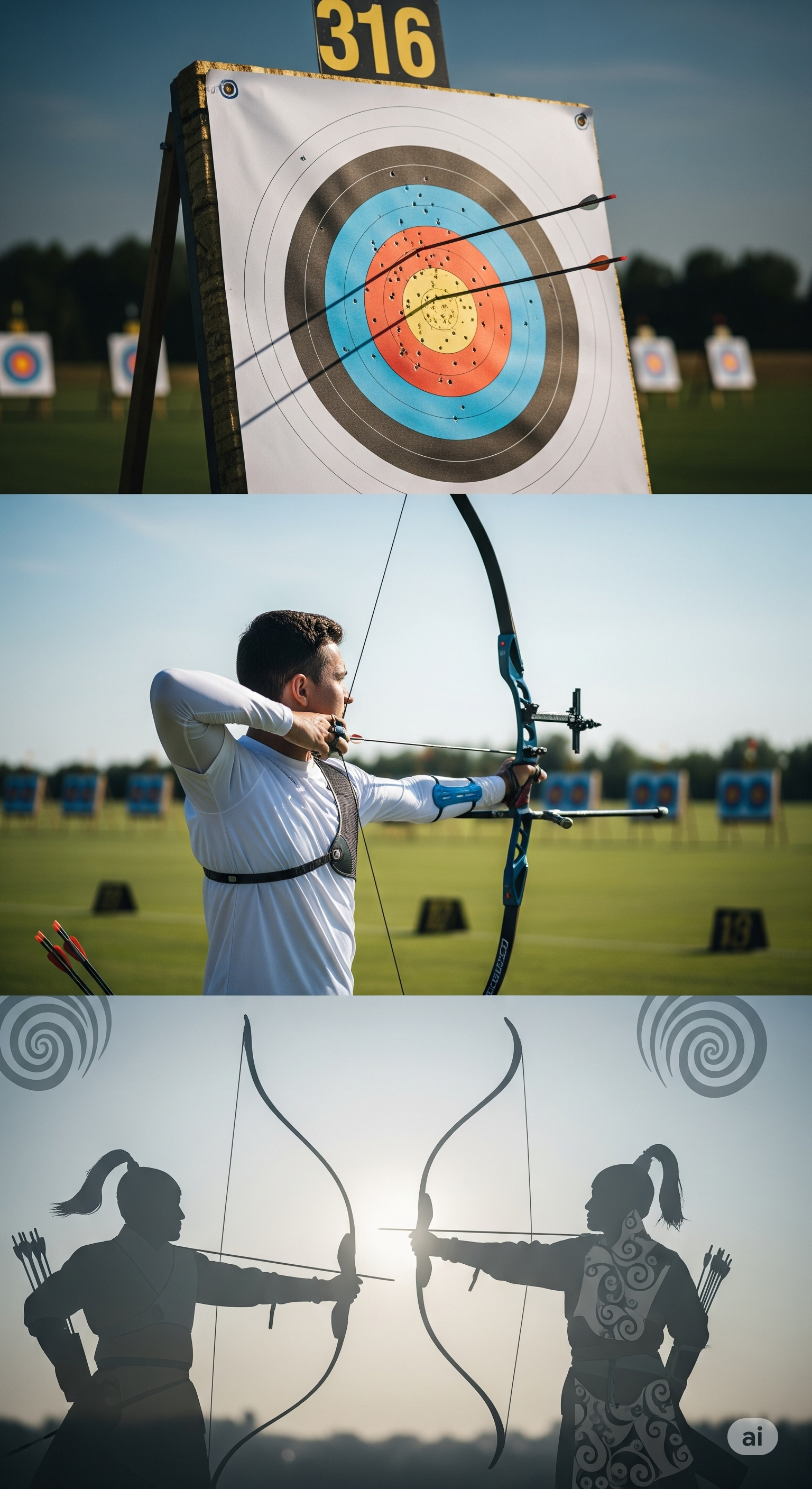
Archery
Precision Sport Involving Bow and Arrow:
Archery is a skill-based sport where athletes use a bow to shoot arrows at a target from a fixed distance. The target has concentric circles with points assigned based on how close the arrow lands to the center, known as the bullseye. It requires steady hands, focus, and muscle control.
Types and Techniques:
There are several styles of archery including recurve, compound, and traditional. In competitions, archers use techniques like proper stance, controlled breathing, and smooth release to ensure accuracy. Each type of bow has unique mechanics, with compound bows offering more precision through pulleys and sights.
Competitive and Cultural Importance:
Archery is featured in the Olympics and various international tournaments, often requiring athletes to shoot under pressure and changing weather conditions. Historically, archery also holds cultural significance in many civilizations, once used in hunting and warfare, now celebrated in festivals, folklore, and sports.
Bocce
Ancient Precision Ball Sport:
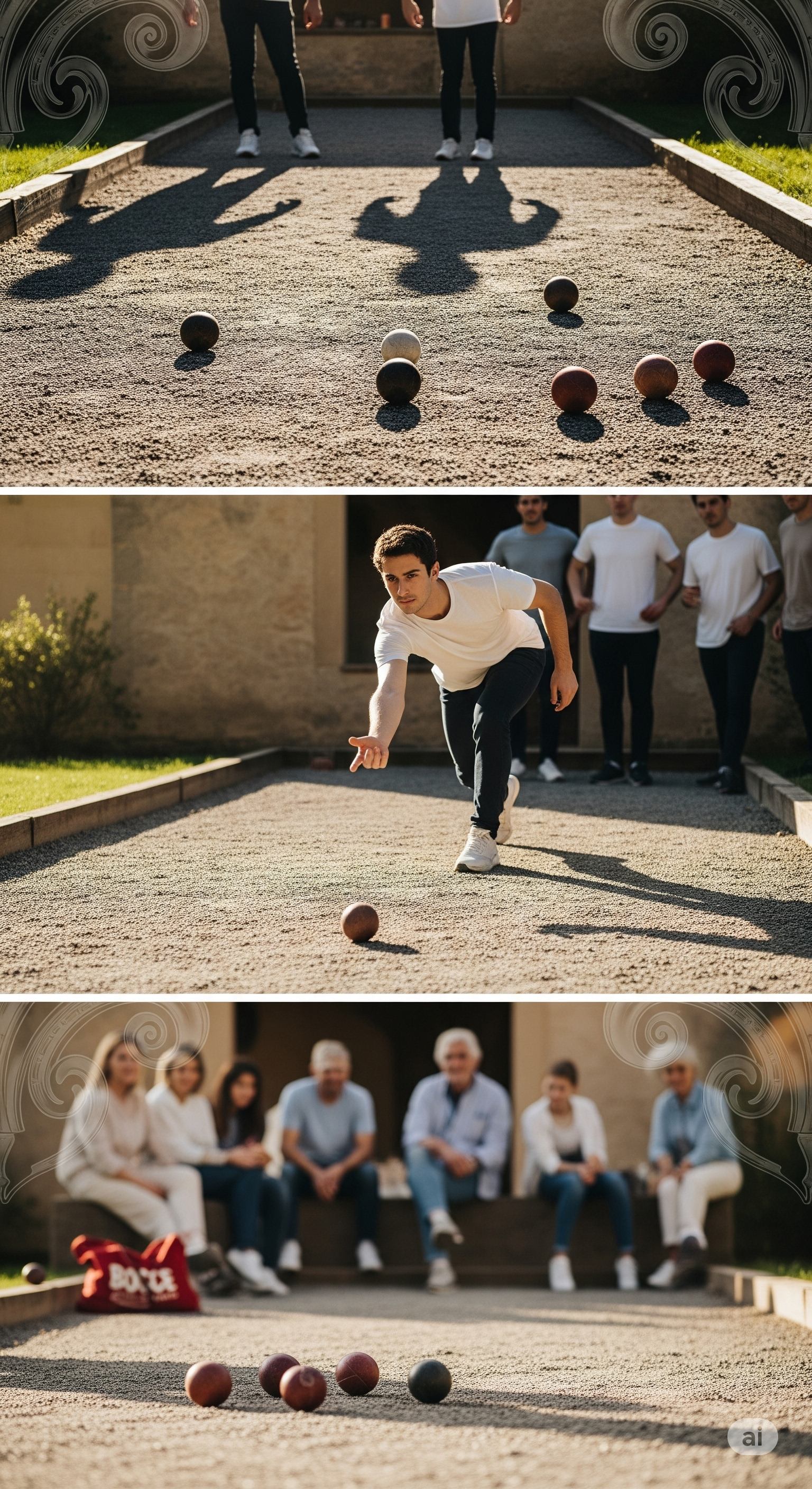
Bocce is a traditional Italian ball sport where players aim to throw or roll larger balls (called bocce) as close as possible to a smaller target ball, known as the pallino or jack. It’s typically played on a flat, narrow court, and can be enjoyed casually or competitively.
Gameplay and Strategy:
Players or teams take turns throwing their bocce balls, using skill and strategy to either land closest to the pallino or knock opponents’ balls away. Scoring is based on proximity to the pallino after all balls are thrown in a round. Games usually go to a set point total, like 12 or 16.
Inclusive and Social Game:
Bocce is popular for being accessible to all ages and skill levels, including in para-sports. It promotes social interaction, patience, and tactical thinking. Whether played in backyards, parks, or professional courts, bocce fosters a relaxed yet competitive environment that emphasizes precision and placement over power.
Kho-Kho
Traditional Indian Tag Game:
Kho-Kho is a fast-paced, team-based sport originating from India. It is played between two teams of 12 players (with 9 on the field at a time). The chasing team tries to tag out the runners within a fixed time by using speed, strategy, and coordination, while runners aim to avoid being touched.
Unique Gameplay Mechanics:
The game is played on a rectangular field with a central lane and wooden poles at each end. Chasers sit in alternate directions, and only one active chaser runs to tag opponents. Players can pass the turn by touching seated teammates and turning directions using poles, making timing and teamwork crucial.
Speed, Agility, and Strategy:
Kho-Kho demands quick reflexes, agile movements, and sharp tactical thinking. It enhances physical fitness, coordination, and mental alertness. The game is especially popular in schools and rural India and is also featured in national and international sports events, promoting indigenous sports culture.
Lawn Tennis
Racket Sport Played on a Rectangular Court:
Lawn Tennis is a globally popular sport played on grass, clay, or hard courts between two (singles) or four (doubles) players. Players use rackets to hit a felt-covered rubber ball over a net, aiming to score points by making the ball land in the opponent’s court without a valid return.
Scoring and Match Format:
The scoring system in tennis is unique—points progress as 15, 30, 40, and game. Matches are divided into sets, usually played as best of 3 or 5 sets. A player must win at least six games with a two-game lead to win a set. Tiebreakers are used when sets reach 6–6, depending on tournament rules.
Physical and Mental Demands:
Lawn tennis requires a combination of strength, speed, endurance, and hand-eye coordination. Players must also master various strokes like serves, volleys, forehands, and backhands. Strategic placement, anticipation of the opponent’s shots, and mental toughness are critical for success at all levels of the game.
Volleyball
Team Sport Focused on Rally and Coordination:
Volleyball is played between two teams of six players each, separated by a net. The main objective is to send the ball over the net and ground it on the opponent’s court, while preventing the same on their side. Each team is allowed up to three touches to return the ball, promoting teamwork and strategy.
Scoring and Match Structure:
A match is typically played in a best-of-five sets format. Each set goes to 25 points (15 in the deciding fifth set), and a team must win by at least two points. Rally scoring is used, meaning a point is awarded on every serve, making the game fast-paced and exciting.
Skills and Athletic Requirements:
Volleyball demands explosive movements, quick reflexes, and excellent communication. Key skills include serving, setting, spiking, blocking, and digging. Players must anticipate plays, react instantly, and work closely with teammates, making it both a physically intense and mentally engaging sport.
Hockey
Fast-Paced Team Sport with Sticks and Ball:
Hockey is a dynamic game played between two teams of 11 players each, using curved sticks to hit a small, hard ball into the opponent’s goal. It is played on grass, turf, or indoor courts and requires speed, stamina, and precise stick-handling skills.
Gameplay, Positions, and Rules:
The game consists of four quarters, each lasting 15 minutes. Teams are divided into forwards, midfielders, defenders, and a goalkeeper. Players use tactics like passing, dribbling, and tackling to move the ball and defend. Fouls like obstruction or high sticks can lead to penalties or penalty corners.
Strategic and Skill-Based Sport:
Hockey combines physical endurance with strategic planning. Quick decision-making, teamwork, and field awareness are crucial. The game is especially popular in countries like India, the Netherlands, Australia, and Germany, and it features prominently in the Olympics and other international competitions.
Yoga
Ancient Practice for Body, Mind, and Spirit:
Yoga is a holistic discipline that originated in ancient India, aiming to harmonize the body, mind, and soul. It includes physical postures (asanas), breathing techniques (pranayama), and meditation (dhyana), promoting inner peace, mental clarity, and spiritual growth.
Physical and Mental Benefits:
Regular practice of yoga enhances flexibility, strength, balance, and posture. It also reduces stress, anxiety, and depression by calming the nervous system. Different forms of yoga, such as Hatha, Vinyasa, and Ashtanga, cater to various fitness levels and goals, making it accessible to all.
Global Impact and Lifestyle Integration:
Today, yoga is embraced worldwide as a natural method of maintaining health and wellness. Beyond physical exercise, it encourages mindful living, discipline, and self-awareness. International Yoga Day (June 21) reflects its universal appeal and its deep cultural and philosophical roots in Indian tradition.
Table Tennis
Fast-Paced Indoor Racket Sport:
Table Tennis, also known as ping-pong, is played on a rectangular table divided by a net, where players hit a lightweight ball back and forth using small paddles. It can be played in singles (1 vs 1) or doubles (2 vs 2), and demands quick reflexes, precise timing, and strategic shot placement.
Scoring and Match Structure:
A standard match is played as best of 5 or 7 games, with each game going to 11 points (a player must win by 2). Players alternate serves every two points, and change ends after each game. Fast-paced rallies, spins, and serves are key to gaining points and outplaying opponents.
Skills and Global Reach:
Table Tennis requires exceptional hand-eye coordination, agility, and focus. Mastery of techniques like topspin, backspin, and smashes gives players a competitive edge. The sport enjoys immense popularity worldwide—especially in Asia and Europe—and is played at the Olympic level, in schools, and as a recreational activity across all age groups.
Kabaddi
Traditional Indian Contact Sport:
Kabaddi is a high-energy, team-based sport rooted in ancient India, played between two teams of seven players each. One player (the raider) enters the opponent’s half to tag defenders and return safely, all while continuously chanting “Kabaddi” to prove they aren’t holding their breath. The game blends physical strength, agility, and tactical thinking.
Rules and Gameplay Dynamics:
Each raid lasts up to 30 seconds. The raider scores points by tagging defenders and returning, while defenders aim to stop the raider by tackling. Teams alternate between raiding and defending, and points are scored through successful tags, tackles, and bonus moves like crossing the bonus line without being caught. Matches are typically played in two 20-minute halves.
Skill, Strategy, and Global Popularity:
Kabaddi requires a combination of speed, strength, timing, and teamwork. Defenders work in coordination using formations like chains and corners, while raiders use swift footwork and feints. Once popular mainly in South Asia, kabaddi has grown into an internationally recognized sport, featured in the Asian Games and professional leagues like the Pro Kabaddi League (PKL).
Football
World’s Most Popular Team Sport:
Football, also known as soccer in some countries, is played between two teams of 11 players each on a rectangular field with goals at both ends. The primary objective is to score goals by kicking the ball into the opposing team’s net while following rules that prohibit the use of hands (except by the goalkeeper).
Match Structure and Rules:
A standard football match consists of two halves of 45 minutes each, with a 15-minute halftime break. The game is officiated by a referee and assistants, enforcing rules such as offside, fouls, and free kicks. In tournaments, if a match ends in a draw, extra time or penalty shootouts may be used to determine the winner.
Global Influence and Skill Development:
Football promotes teamwork, strategy, stamina, and ball control skills like dribbling, passing, and shooting. It’s played and watched in nearly every country, with major events like the FIFA World Cup uniting millions of fans. At both grassroots and professional levels, football fosters discipline, sportsmanship, and international camaraderie.
Carrom
Popular Indoor Board Game of Skill and Precision:
Carrom is a tabletop game widely played in South Asia and other parts of the world. It involves flicking a striker disk with fingers to pocket smaller pieces (carrom men) into any of the four corner pockets of a square wooden board. The game combines elements of skill, strategy, and concentration.
Game Setup and Rules:
Each game is played between 2 or 4 players (singles or doubles). The objective is to pocket all of one’s assigned carrom men (black or white), followed by the red coin known as the queen. Players take turns and must follow rules such as covering the queen before the last coin and avoiding fouls like pocketing the striker.
Focus, Angles, and Control:
Success in carrom depends on understanding angles, mastering finger techniques, and maintaining focus. Players use a variety of shots—straight hits, rebounds, and cut shots—to outmaneuver opponents. The game encourages calmness, hand-eye coordination, and sportsmanlike conduct, making it a favorite in homes, clubs, and competitive tournaments.
Basketball
Dynamic Team Sport with Fast-Paced Action:
Basketball is played between two teams of five players each on a rectangular court with a hoop at each end. The objective is to score points by shooting the ball through the opponent’s basket while defending your own. The game is known for its speed, skillful dribbling, and high-scoring excitement.
Game Structure and Scoring:
A standard basketball game consists of four quarters (each 10 or 12 minutes depending on the league), with a halftime break. Points are scored as 2-pointers (inside the arc), 3-pointers (beyond the arc), and 1-point free throws. The team with the most points at the end wins, with overtime played if the scores are tied.
Skills, Techniques, and Global Appeal:
Key basketball skills include dribbling, passing, shooting, blocking, and rebounding. Players must also excel in teamwork, court vision, and quick decision-making. Globally, basketball is hugely popular, with professional leagues like the NBA and international events such as the Olympics drawing millions of fans and aspiring athletes.
More Than Just Games
All sports at SNPS are coached by CCP-certified professionals who focus not just on physical performance but also on discipline, goal setting, and mental strength. Students are encouraged to participate in inter-school, district, state and national-level competitions, and we take pride in our sporting alumni who have brought laurels to the school.
Whether on the field, in the arena, or across the chessboard, every student learns the true spirit of competition, grace in victory, resilience in defeat, and integrity in all pursuits.